
Last updated November 21, 2026
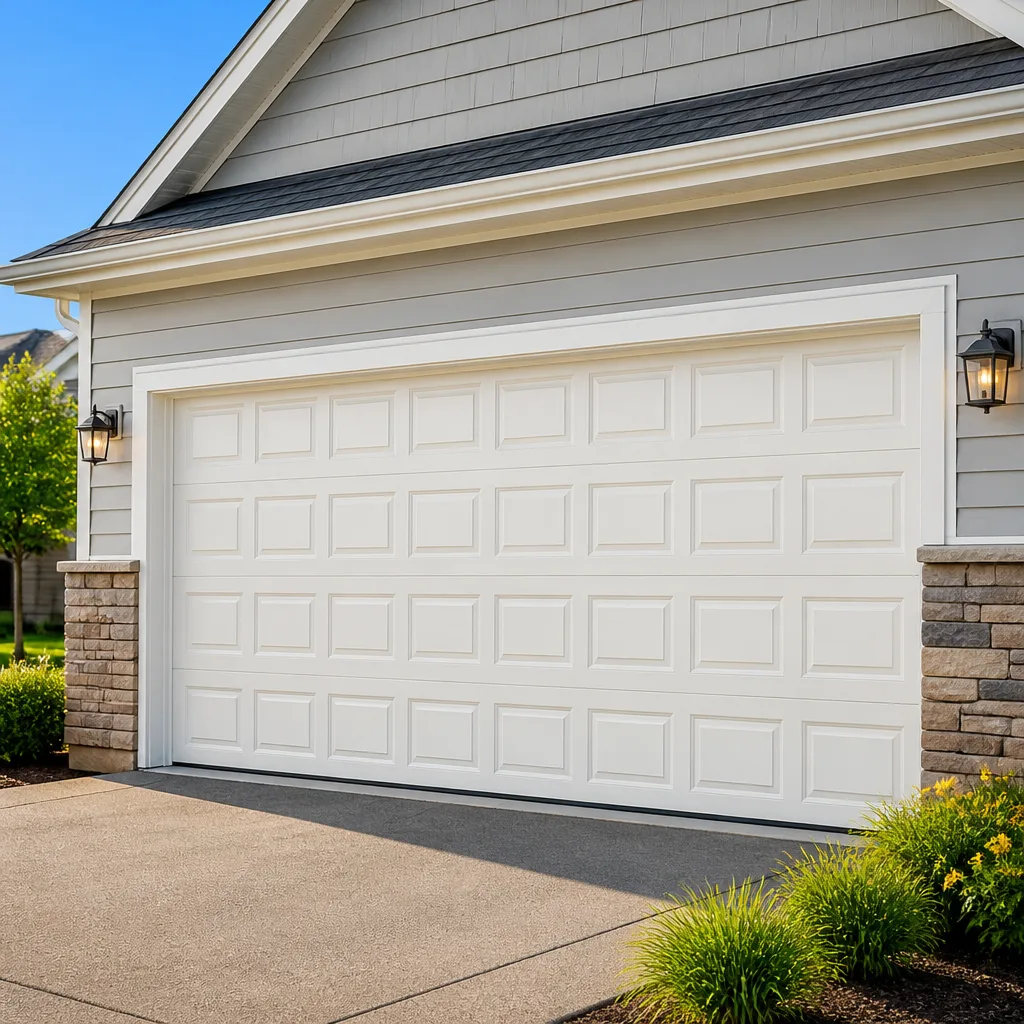 Raised-panel steel
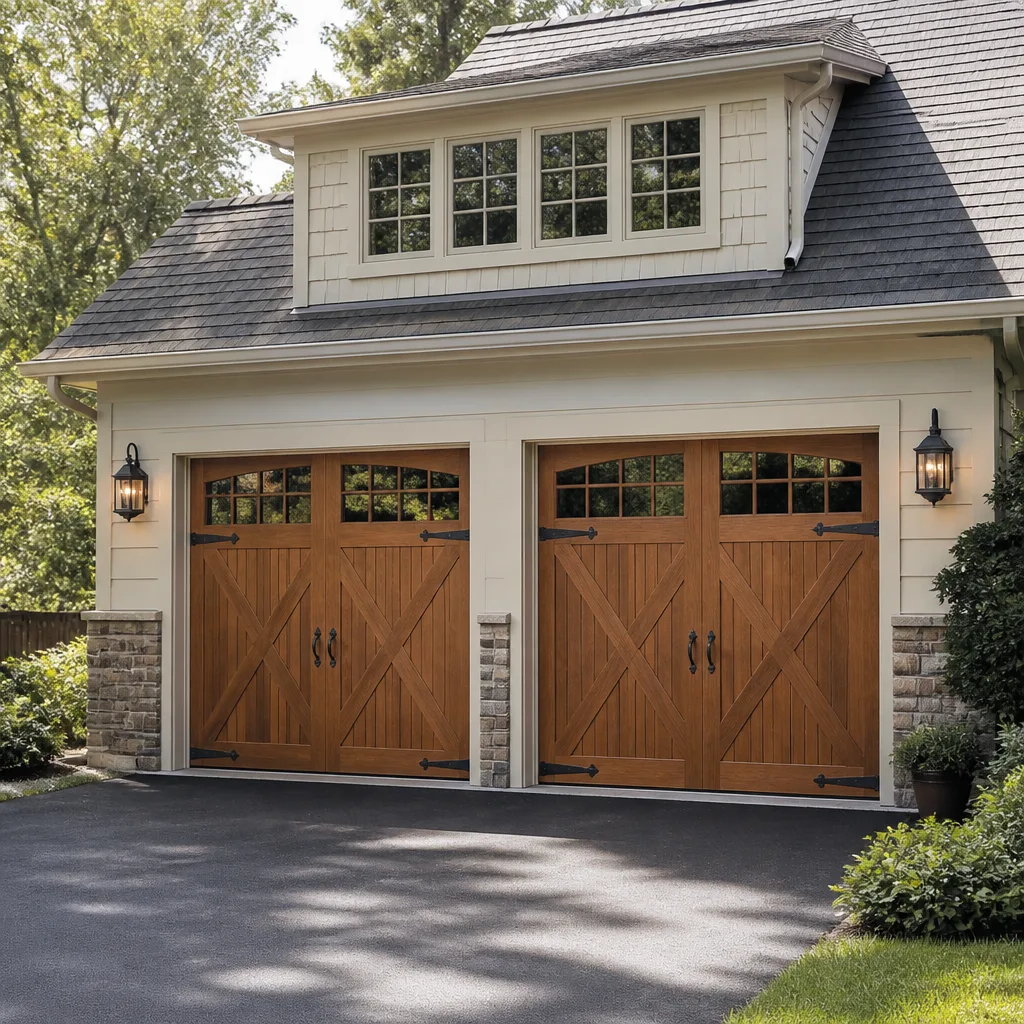 Carriage house
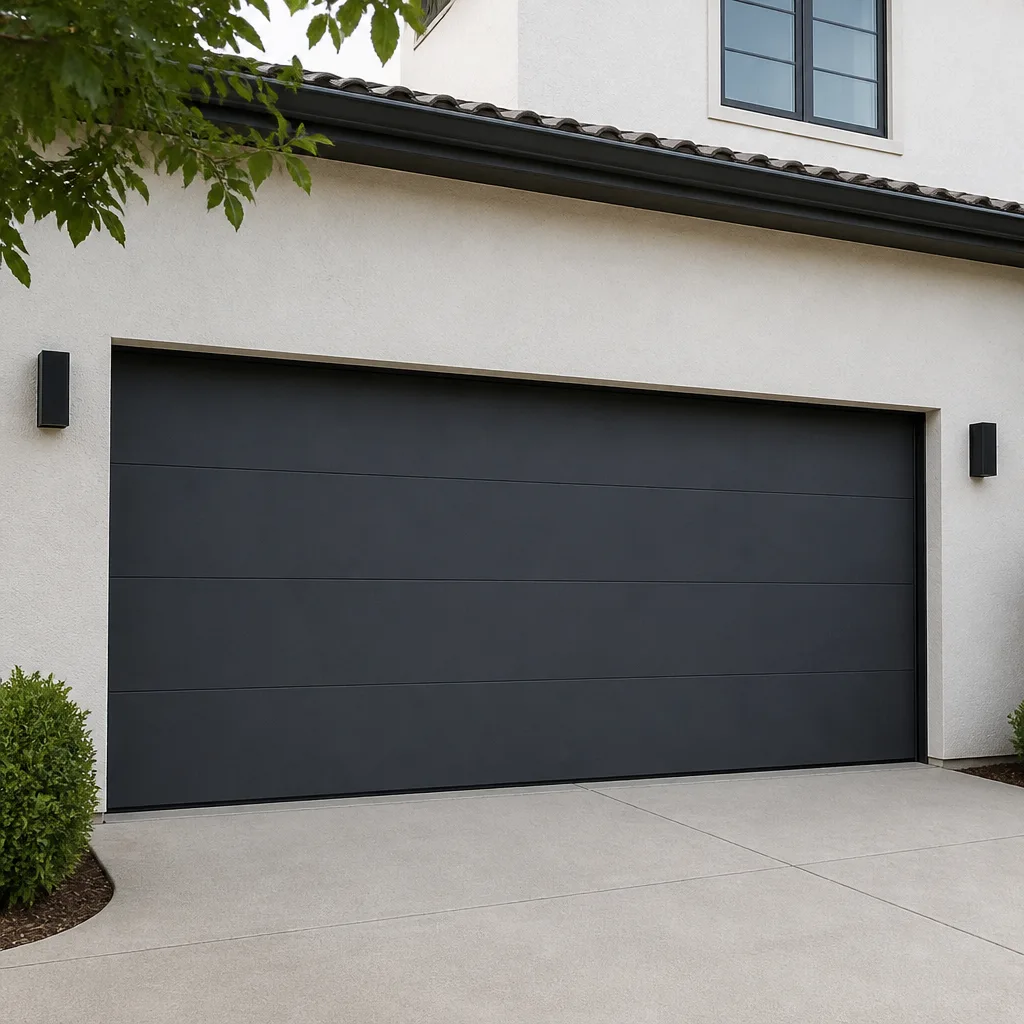 Modern flush
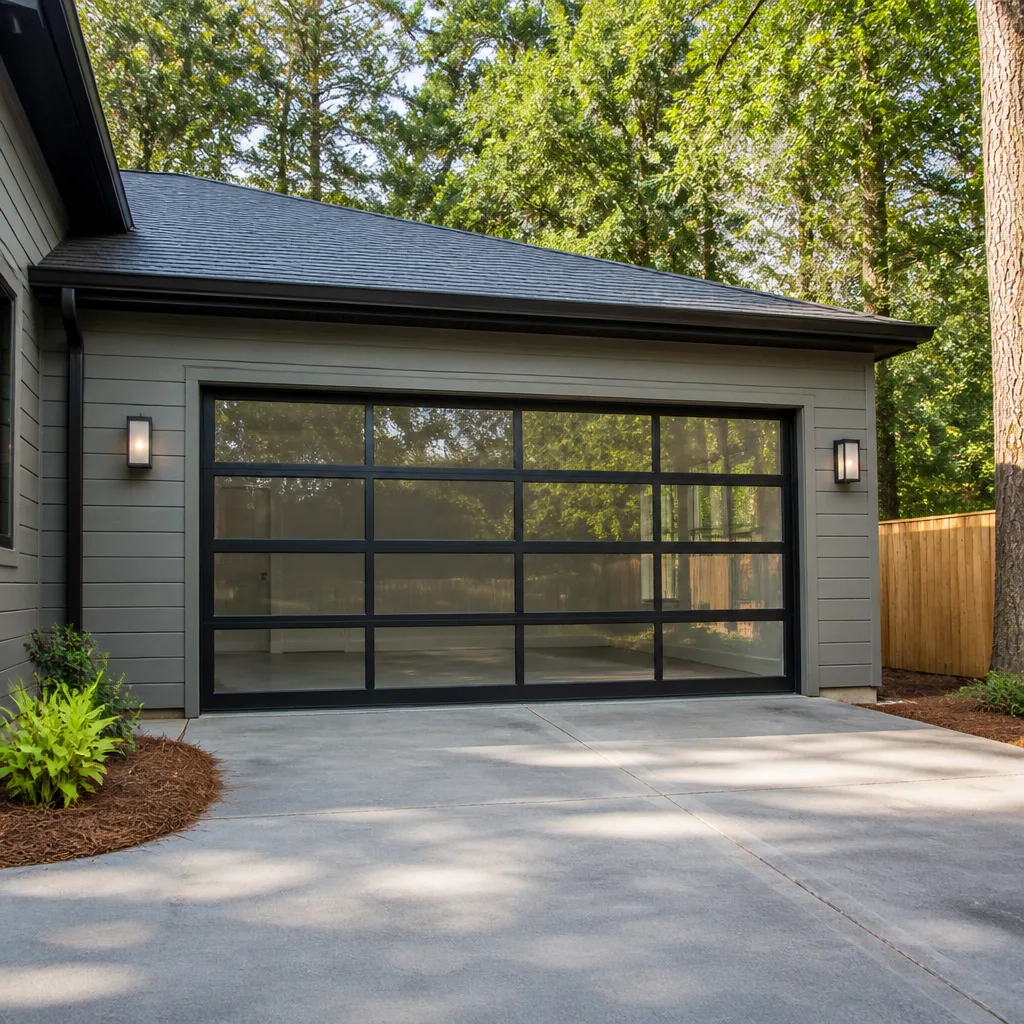 Full-view glass
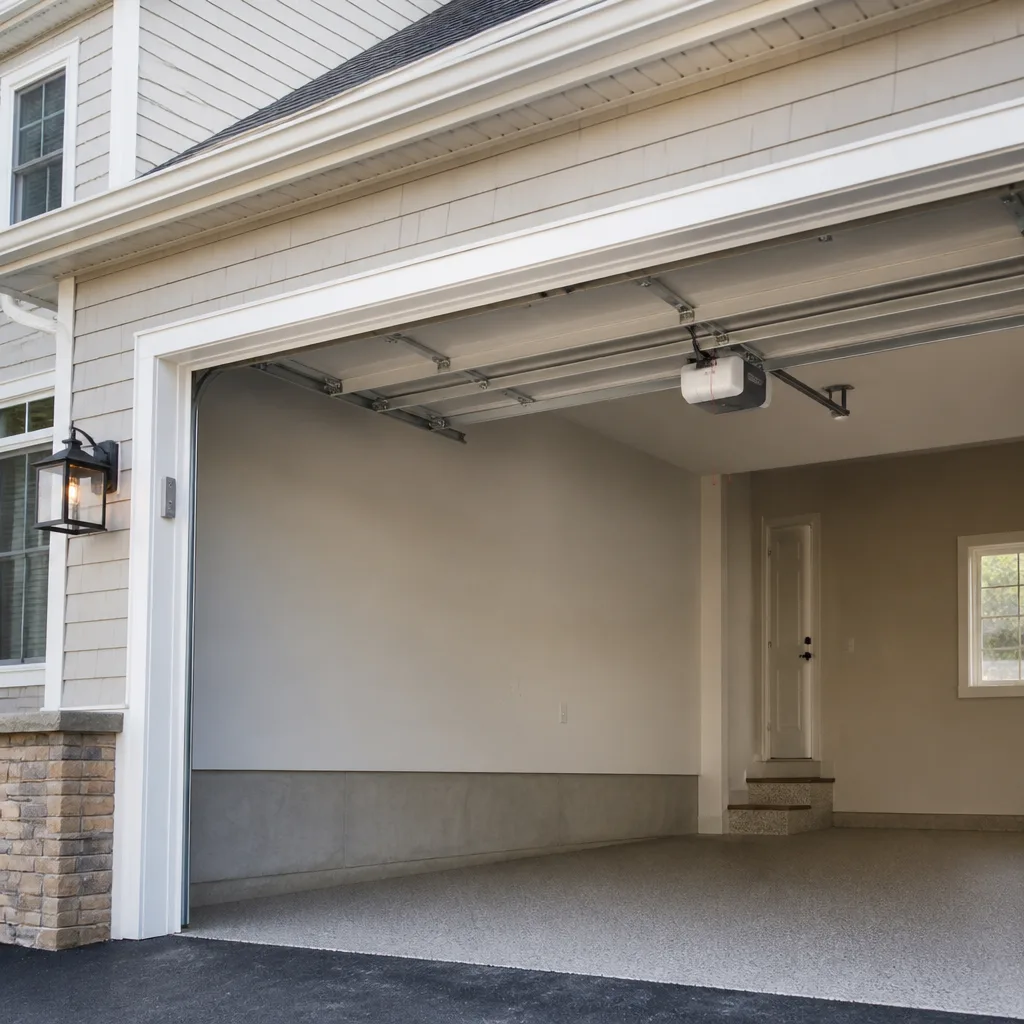 LiftMaster openers
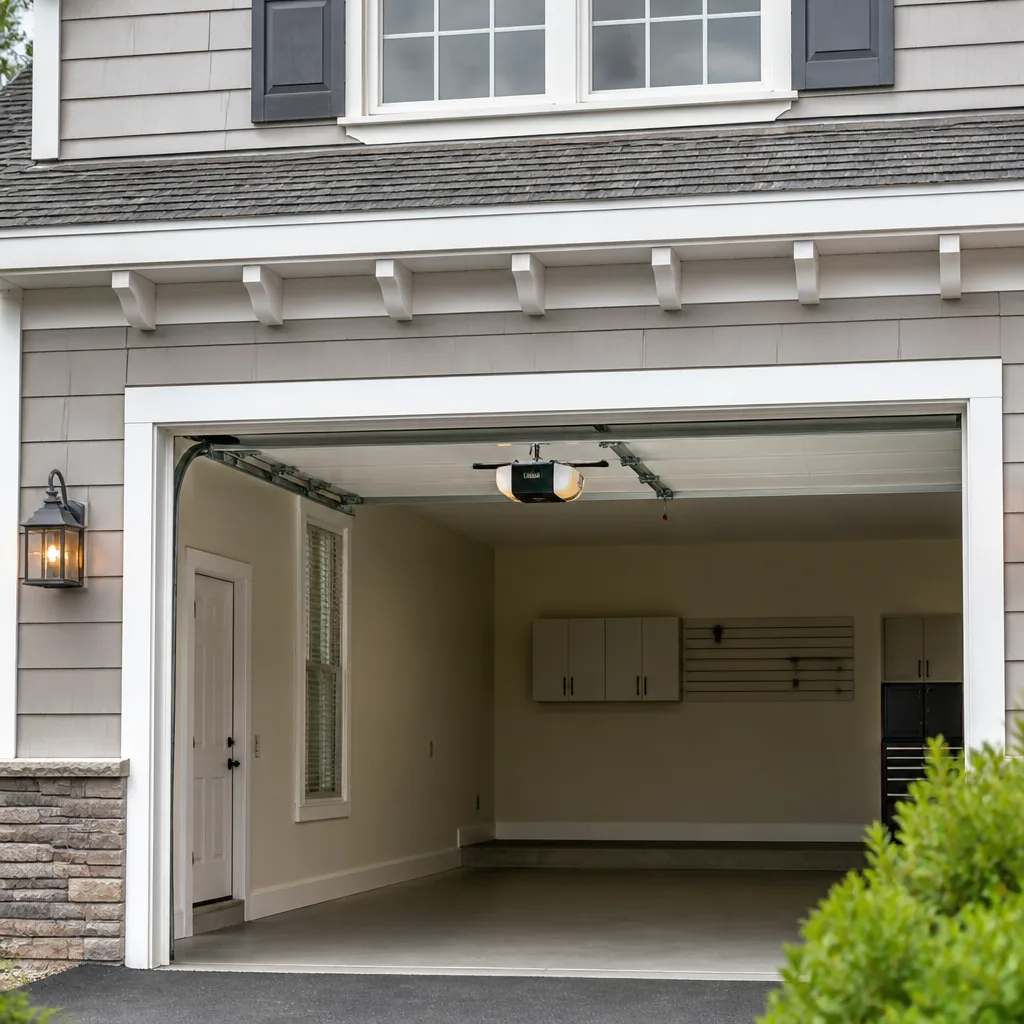 Chamberlain openers
Full 25-point door and opener safety check with every visit - springs, cables, rollers, tracks, and your LiftMaster or Chamberlain opener included
You get a price before we start. It does not change when the pro arrives.
Get your free estimateSeasonal Garage Door Care for Govans: Year-Round Homeowner’s Guide
The seal that fails in January didn’t crack in January. It dried out in August, and nobody looked at it in October. That’s how garage doors go wrong in Govans: the damage starts in one season and shows up in another. Govans sits in a climate band that pushes on door hardware from four directions – summer humidity, fall debris, winter freeze-thaw, spring pollen and road salt. Most maintenance advice treats all of the mid-Atlantic as one zone. It isn’t. This guide maps each task to the season that actually causes the wear, so your door gets attention when it needs it instead of a generic annual once-over.
Quick Answer
Garage door care in Govans follows a four-season cycle: check weatherstripping and sensor alignment in summer, clear tracks and re-lubricate in fall, watch bottom seals and springs through freeze-thaw in winter, and inspect for corrosion and recalibrate opener sensitivity in spring. A door that gets this rhythm of care avoids most of the failures we’re called out for. The one job you should never take on yourself is spring or cable work – those are high-tension parts, and a trained technician with the right tools should handle them.
Styles & brands we work with
- Raised-panel steel
- Carriage house
- Modern flush
- Full-view glass
- LiftMaster openers
- Chamberlain openers
Table of Contents
- Why Govans Doors Age in a Specific Sequence
- Summer: Humidity, Heat Expansion, and UV Damage
- Fall: Tracks, Lubrication, and Spring Cycle Counts
- Winter: Freeze-Thaw, Bottom Seals, and Torsion Springs
- Spring: Salt Corrosion and Opener Recalibration
- The Govans Month-by-Month Task Calendar
- Why Springs and Cables Are Never a DIY Job
- Brand-Specific Care: Chamberlain, Clopay, Genie, Amarr
Why Govans Doors Age in a Specific Sequence
Garage door parts don’t wear out at the same rate, and they don’t wear out on a calendar. They wear out when the local weather puts stress on them, and in Govans that stress arrives in a predictable order. Understanding the sequence is the whole point of seasonal care, because it tells you which part to look at and when.
Start with the materials. A wood or wood-composite door absorbs moisture when the air is heavy in late summer. The panels swell slightly, the paint film stretches, and joints that were tight in May open by a fraction of an inch. That swelling doesn’t fail the door immediately. But it does stress the seams, and every winter freeze that follows works those slightly open seams a little wider. By the time a homeowner notices a soft spot or a bubbling paint edge, the swelling that started it happened months earlier.
Then there’s the hardware. Steel tracks, hinges, and rollers are exposed to humidity in summer and road salt spray in winter. The pattern in Govans is corrosive stress on two fronts: moisture in the warm months, salt in the cold ones. Rollers that run smoothly in dry weather can start to drag once the humidity climbs, and a door that tracked straight all summer can bind in January when the lubricant thickens.
And the springs. Torsion springs on a modern door do a set number of cycles – one cycle is one open and one close. A typical household runs the door several times a day, and in a Govans home where the garage is the main entry, the count climbs fast. Cold weather doesn’t add cycles, but it does make the steel more brittle, which is why a spring that held all fall is more likely to snap on a cold morning.
What this means for you: don’t think of maintenance as one annual chore. Think of it as a relay, where each season hands a specific problem to the next. The spring inspection you do in November protects you through January. The seal check you do in August protects you through the first hard freeze. In our experience, the homeowners who get the longest life out of a door are the ones who match the task to the season, not the ones who do everything at once in the spring.
Summer: Humidity, Heat Expansion, and UV Damage
Summer in Govans puts three specific stresses on a garage door: humidity that swells wood and composites, heat that expands metal and drifts sensor alignment, and sunlight that breaks down rubber and vinyl weatherstripping. Each one has a straightforward check you can do without tools more complicated than a level and a rag.
Humidity and wood-composite doors
A Clopay or Amarr door with a wood-composite skin behaves differently from a steel door in humid weather. The composite absorbs some moisture, the surface moves, and paint or stain film can crack at the panel edges where the movement is greatest. Walk around the inside of the door in late summer and look for bubbling, chalking, or hairline cracks at the seams. If you find them, plan on resealing before the fall rains arrive. A steel door doesn’t swell, but the joints between sections can trap moisture, so check for rust bloom at the bottom edge.
Sensor alignment drift
The safety sensors at the bottom of the tracks are aligned to a beam thinner than a pencil. Heat expansion of the metal tracks and the door frame can shift the mounting brackets just enough to break that beam. If your door starts reversing for no obvious reason in July or August, the sensors are the first thing to check. Wipe the sensor lenses with a dry cloth, confirm the indicator lights on both units are steady, and if one is flickering, the bracket on that side has likely moved. Many Chamberlain and Genie units will flash a diagnostic code on the opener head when the beam is interrupted, which saves a lot of guessing.
UV damage to weatherstripping
The bottom seal and the perimeter weatherstripping take direct sun on a south- or west-facing door. Over a summer, the rubber dries, hardens, and starts to crack. Run your hand along the bottom seal and pinch it. If it feels brittle rather than springy, it’s already past its useful life and will let water and cold air in all winter. Replacing a bottom seal is a reasonable homeowner job on most doors, and doing it in late summer beats doing it in a January cold snap.
If the door itself is beyond care – cracked panels, a bent track from a heat-warped frame – that’s a conversation about garage door installation, not maintenance. We’re happy to walk through the difference.
Fall: Tracks, Lubrication, and Spring Cycle Counts
Fall is the season to prepare the door for cold, and in Govans that means three jobs: clear the tracks, change the lubricant spec to something that holds up at low temperature, and get an honest count on your springs before winter stress hits. Leaf debris is the big local factor here – mature trees around Govans drop enough material to pack the track channels and the space between the door and the frame.
The track-clearing protocol
- With the door fully closed and the opener disconnected, use a stiff brush or a vacuum with a crevice tool to clear leaves, twigs, and grit from the vertical and horizontal track channels.
- Wipe the inside of the tracks with a dry cloth. Don’t use solvent – it strips the factory finish and invites rust.
- Check the track for dents or bends by running a level along the vertical section. A track that’s out of plumb will bind the door all winter.
- Clear the photo-eye sensor lenses and the area around the bottom seal, where debris collects and can trip the safety reverse.
Lubrication spec for cold weather
The lubricant that keeps rollers and hinges quiet in July can turn gummy when the temperature drops. Before the first hard freeze in Govans, apply a garage-door-specific lubricant – not household oil, not grease – to the rollers, hinges, and the torsion spring coils. A light spray designed for cold-weather use keeps the moving parts gliding without attracting grit. Wipe off any excess so it doesn’t collect debris.
Spring cycle count check
You can’t see a spring’s remaining life, but you can hear and feel the warning signs. With the door closed, listen for a clicking or popping sound when the door starts to move. Look at the torsion spring above the door for a gap or a visibly stretched section – both mean the spring has lost tension. If you see either, stop operating the door and call a technician. A spring does not improve with use, and a failing one under tension is a genuine hazard. The same goes for the cables: a frayed cable is a call-a-pro situation, not a weekend project.
Fall is also a good time to think about garage door repair for any nagging issue you’ve been putting off, because winter is the worst time to discover a problem.
Winter: Freeze-Thaw, Bottom Seals, and Torsion Springs
Winter is when the deferred maintenance from summer and fall shows up as a real failure. Govans gets enough freeze-thaw cycling to be hard on bottom seals and springs, and the two failures look similar from inside the car – the door won’t move or won’t close cleanly – but they need very different responses.
When the door freezes to the floor
A bottom seal that’s cracked or flattened will let meltwater under the door, and a hard freeze bonds the rubber to the slab. The door strains to open, the opener may trip its force limit, and the seal tears. If this happens, the fix is not to force the door up with the opener – that puts load on the springs and the opener gear. Clear the ice along the bottom edge with a plastic scraper (never a metal tool that gouges the seal or the concrete), then check the seal for damage. If it’s torn, replace it before the next cold night. Preventing the freeze in the first place means keeping the slab dry and inspecting the seal in the fall, which is why late-summer seal checks matter.
When the spring is the actual failure
If the door won’t lift at all, or you hear a loud bang from the garage when the door starts to move, the problem is almost certainly a broken torsion spring, not ice. A broken spring leaves the door too heavy to lift safely, and the opener will strain against it. Do not keep operating the door and do not try to open it by hand. The correct response is to leave the door closed and call a technician who works with high-tension springs. In Govans, cold snaps are when spring failures cluster, and we’d rather you call us than fight a door that’s struggling under a broken spring.
Torsion springs in cold weather
Cold makes spring steel more brittle. A spring that’s near the end of its cycle life is more likely to snap on a cold morning than on a warm afternoon. The check is simple: look for a gap in the coil and listen for that bang. If you’ve had the door for years and never had the springs serviced, winter is the season to have them looked at, not the season to test them.
Spring: Salt Corrosion and Opener Recalibration
Spring in Govans arrives with a cleanup job that most homeowners don’t think about: road salt. Winter road treatment sprays up onto the lower panels, hinges, and rollers of a door that faces a salted street, and that salt starts its work as soon as the weather warms and moisture returns. Spring is also when the temperature normalizes enough that an opener that was acting up in the cold may run differently – sometimes better, sometimes not, and either way it needs recalibrating.
Salt-corrosion inspection
- Check the bottom panel and the bottom hinge for rust bloom, especially on steel doors facing a plowed street.
- Inspect the rollers for flat spots or corrosion that makes them bind.
- Look at the bottom of the tracks and the door frame for salt residue – a white or chalky film is a giveaway.
- Wash the lower panels with plain water and a soft brush, then dry them thoroughly so no moisture sits in the joints.
- Touch up any paint chips on the bottom rail before summer humidity gets into them.
Opener sensitivity recalibration
Every opener has a force setting and a travel setting that tell it how hard to push and how far to go. Cold weather and seasonal swelling can push the door just outside that setting, so an opener that worked all winter may start reversing or stopping short in spring. The temperature normalizing is your cue to recalibrate. On most Chamberlain and Genie models the force and travel adjustments are on the opener head, and the manual walks you through the sequence. If the opener is a Wi-Fi or app-connected unit, the app may also report a fault that points to travel or force limits.
If the opener still acts up after recalibration, the issue may be the opener itself or the door’s balance. That’s when garage door opener repair makes more sense than more adjusting. We diagnose by brand-specific logic rather than trial and error, which matters when the unit is a LiftMaster or a Genie with a fault code that has a specific meaning.
The Govans Month-by-Month Task Calendar
This is the one-page version you can print and post next to the garage door. Each row is one month and one task. The tasks are ordered by the season that creates the problem, not by a generic annual checklist.
- January: Listen for a bang when the door starts. If you hear one, stop using the door and call for spring service. Check the bottom seal for freeze damage.
- February: Watch for ice bonding the seal to the floor. Clear ice with a plastic scraper and check the seal for tearing.
- March: Inspect lower panels and hinges for salt corrosion. Wash the bottom rail and touch up paint chips.
- April: Recalibrate opener force and travel settings now that temperatures have normalized. Test the safety reverse.
- May: Check the photo-eye sensors for alignment and clear the lenses. Look for spring pollen on rollers and tracks.
- June: Inspect wood-composite panels for swelling and paint cracking. Plan a reseal if you find either.
- July: Recheck sensor alignment after heat expansion. Wipe lenses and confirm indicator lights are steady.
- August: Check weatherstripping for UV damage and replace the bottom seal if it’s brittle.
- September: Clear leaves and debris from the tracks. Test the door’s balance by hand with the opener disconnected.
- October: Switch to cold-weather lubricant on rollers, hinges, and spring coils. Clean the tracks.
- November: Get a spring cycle count check before winter stress. Listen for clicking or popping at the start of travel.
- December: Final seal check and a full open-close test. Confirm the safety reverse still works.
Post it where you can see it from the driver’s seat. The months aren’t rigid – if you’re behind, catch up on the most recent task first, because each one hands a problem to the next season.
Why Springs and Cables Are Never a DIY Job
Torsion springs and the cables that run alongside them are the highest-risk parts on any garage door, and this is where we stop being diplomatic: leave them to a trained technician. A torsion spring stores enough energy to move a door weighing hundreds of pounds, and when it releases under tension it can cause serious injury in a fraction of a second. Cables are under similar load. The tools, the winding bars, and the knowledge of how to release tension safely are not things to learn from a video.
Spring repair is a named specialty for us, not a job we subcontract or avoid. We perform it with the right tooling and the right sequence, and we treat a snapped spring as a safety-critical failure rather than a routine part swap. That matters in a Govans climate where cold snaps cluster the failures, because a rushed repair on a high-tension part is exactly when someone gets hurt.
What to check without touching the spring
- Listen for a loud bang when the door starts to move.
- Look at the coil above the door for a visible gap or a stretched section.
- Try lifting the door by hand with the opener disconnected – if it’s much heavier than it was, the spring has likely lost tension.
- Check the cables for fraying or slack. A loose cable is a stop-and-call situation.
If any of those checks points to a problem, don’t operate the door. Call and let a technician handle it.
Brand-Specific Care: Chamberlain, Clopay, Genie, Amarr
Doors and openers don’t all fail the same way, and the troubleshooting steps differ by brand. We work on eight major brands, and the brand-specific knowledge is what shortens a diagnostic. A Chamberlain opener reports a sensor-beam fault with a specific light pattern; a Genie unit may use a different code for the same underlying problem. A Clopay wood-composite door has panel-edge behavior you check in late summer; an Amarr steel door has bottom-rail corrosion you check in spring after salt season.
Here’s how we think about the common brands in a Govans home:
- Chamberlain and Genie openers: sensor alignment, force and travel recalibration, and fault-code reading are the recurring seasonal tasks. Wi-Fi and app-connected units can report travel and force faults in the app, which saves time.
- Clopay doors: watch for wood-composite swelling and paint-film cracking in humid months, and reseal before fall rains.
- Amarr doors: watch for salt corrosion at the bottom rail and hinges after winter, and touch up paint chips early.
- LiftMaster, Wayne Dalton, Craftsman, Raynor: the same seasonal logic applies – each brand has its own parts and its own diagnostic sequence, and knowing the sequence is the difference between a quick fix and a guess.
If you’re weighing a repair against a replacement, this is also where our full-cycle coverage helps. The same company that reads a Chamberlain fault code can talk you through Garage Door Repair Govans options for the door itself, so there’s no handoff between an opener specialist and a door installer.
Common Mistakes to Avoid
- Forcing a frozen door open. When the seal bonds to the slab, running the opener against the ice loads the springs and the opener gear. Clear the ice first, then check the seal for tearing.
- Using household oil or grease on the tracks and rollers. In Govans humidity it attracts grit and turns gummy in cold weather. Use a garage-door-specific lubricant, applied lightly, and wipe off the excess.
- Skipping the fall lubricant change. The product that works in July can thicken by January. Re-lubricating before the first freeze is a small job that prevents binding all winter.
- Ignoring a bottom seal that feels brittle in August. A dried-out seal cracks in the first freeze. Replacing it in late summer costs less than dealing with a torn seal and a frozen door in January.
- Adjusting the opener force setting to mask a hard-running door. Cranking up the force to overcome a binding track or a failing spring hides the real problem and strains the opener. Fix the cause, then recalibrate.
- Clearing tracks with a solvent. It strips the factory finish and invites rust. Use a dry brush or cloth instead.
- Operating a door with a visible spring gap or a frayed cable. These are high-tension parts. Stop using the door and call a technician.
See the difference
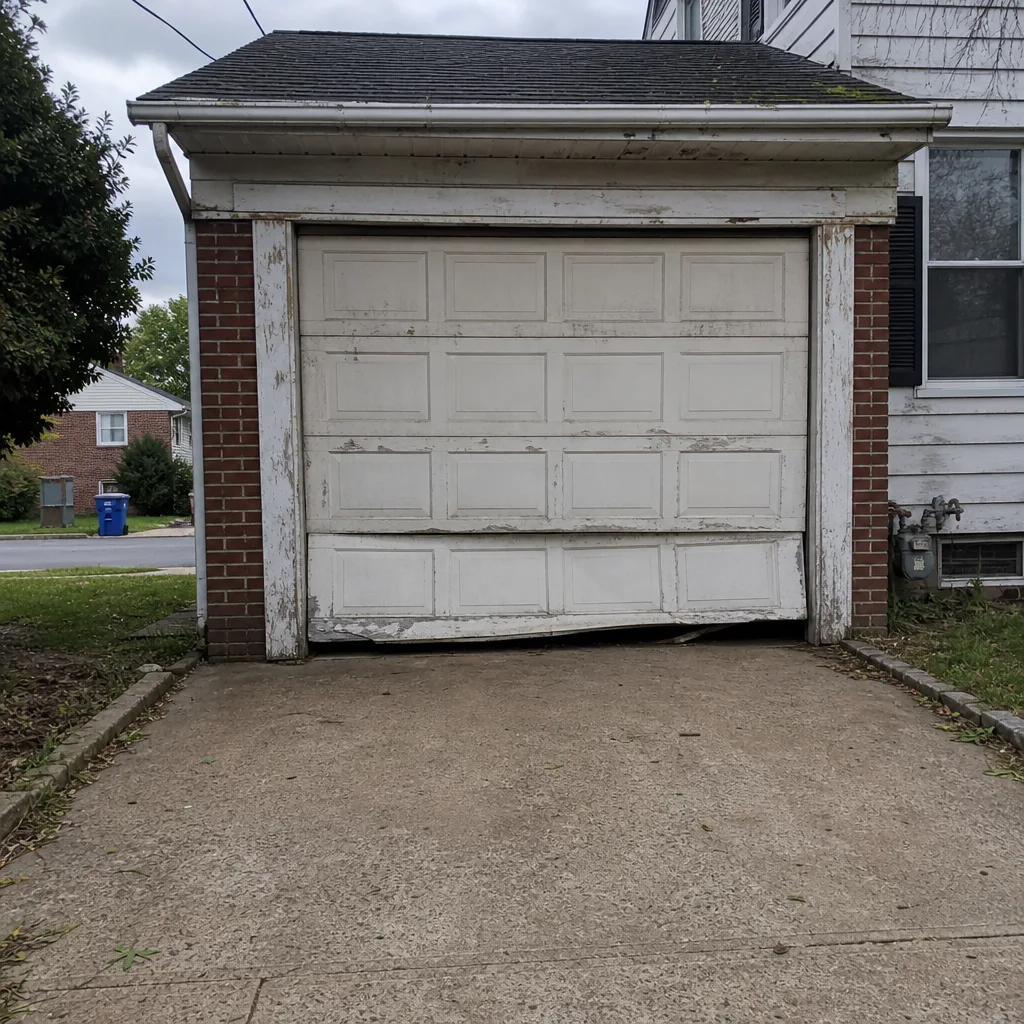 Before
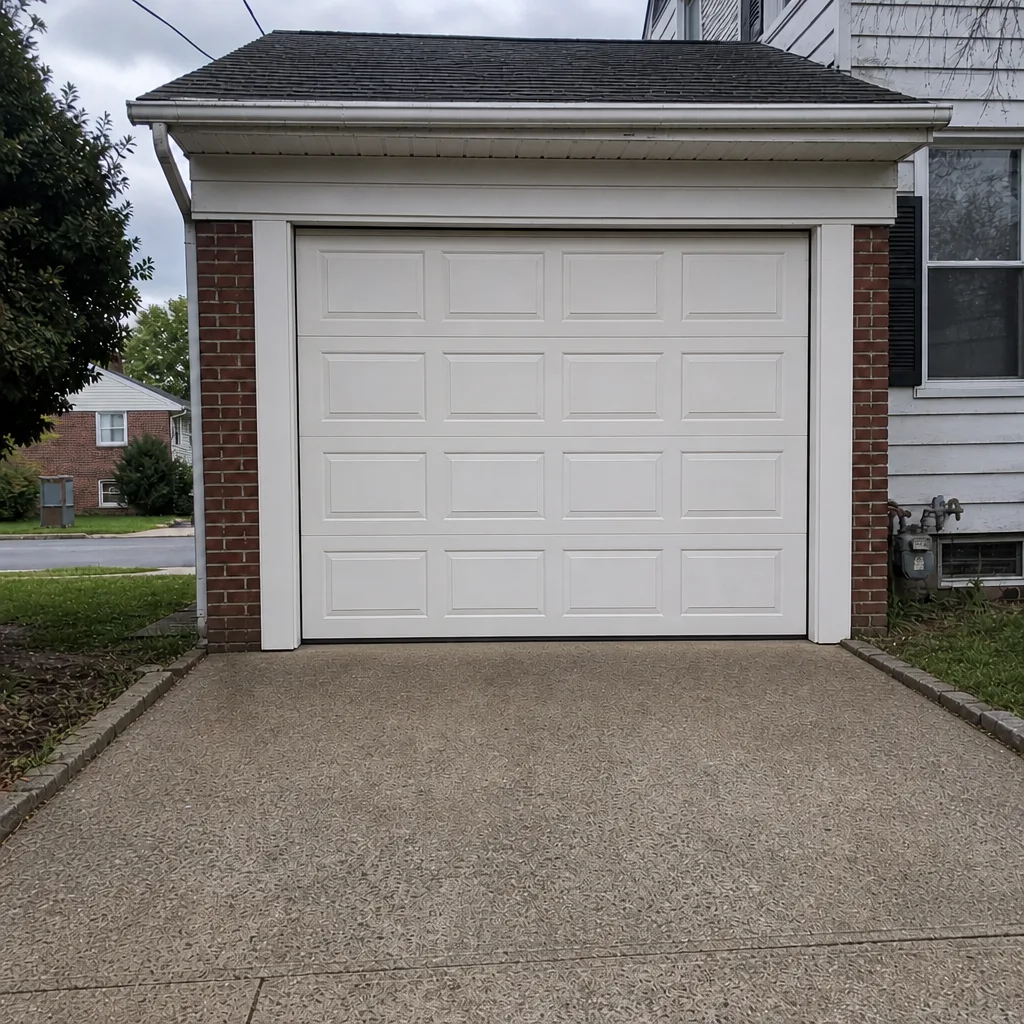 After
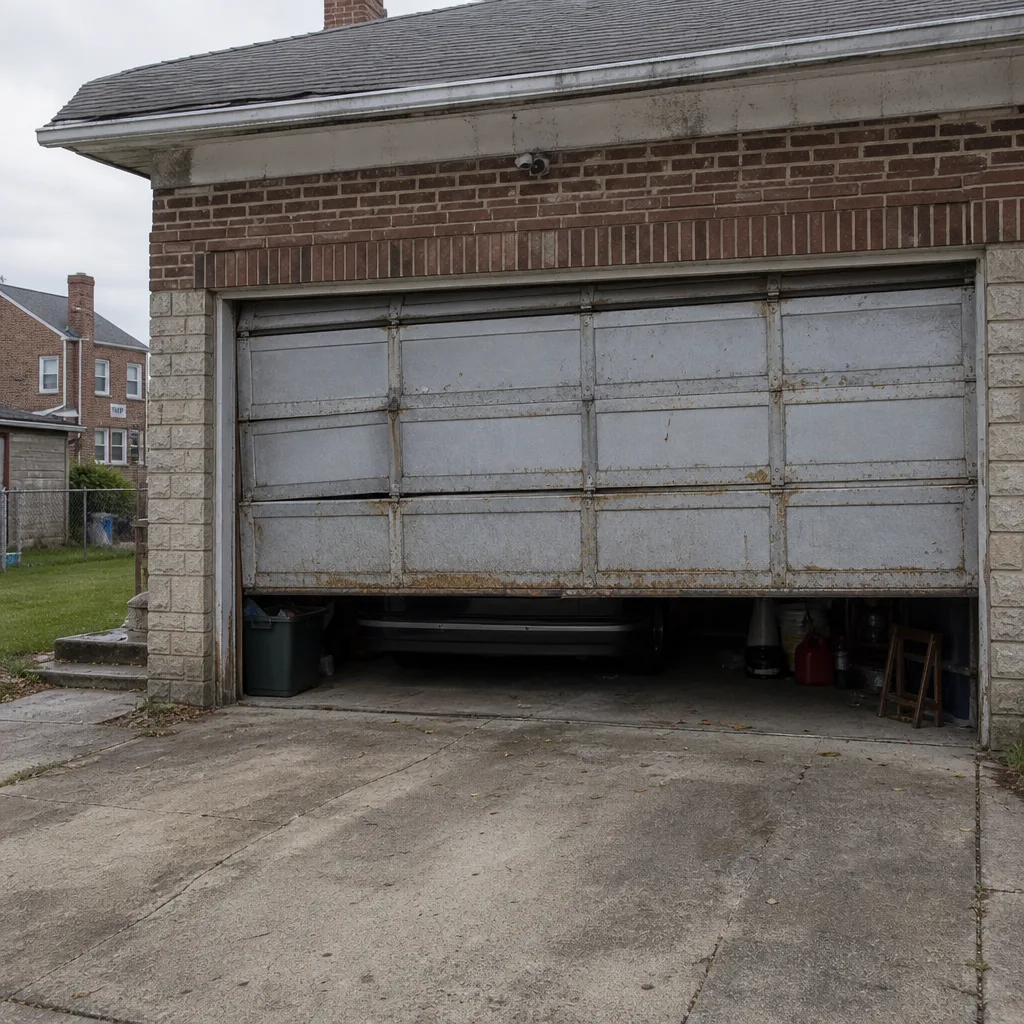 Before
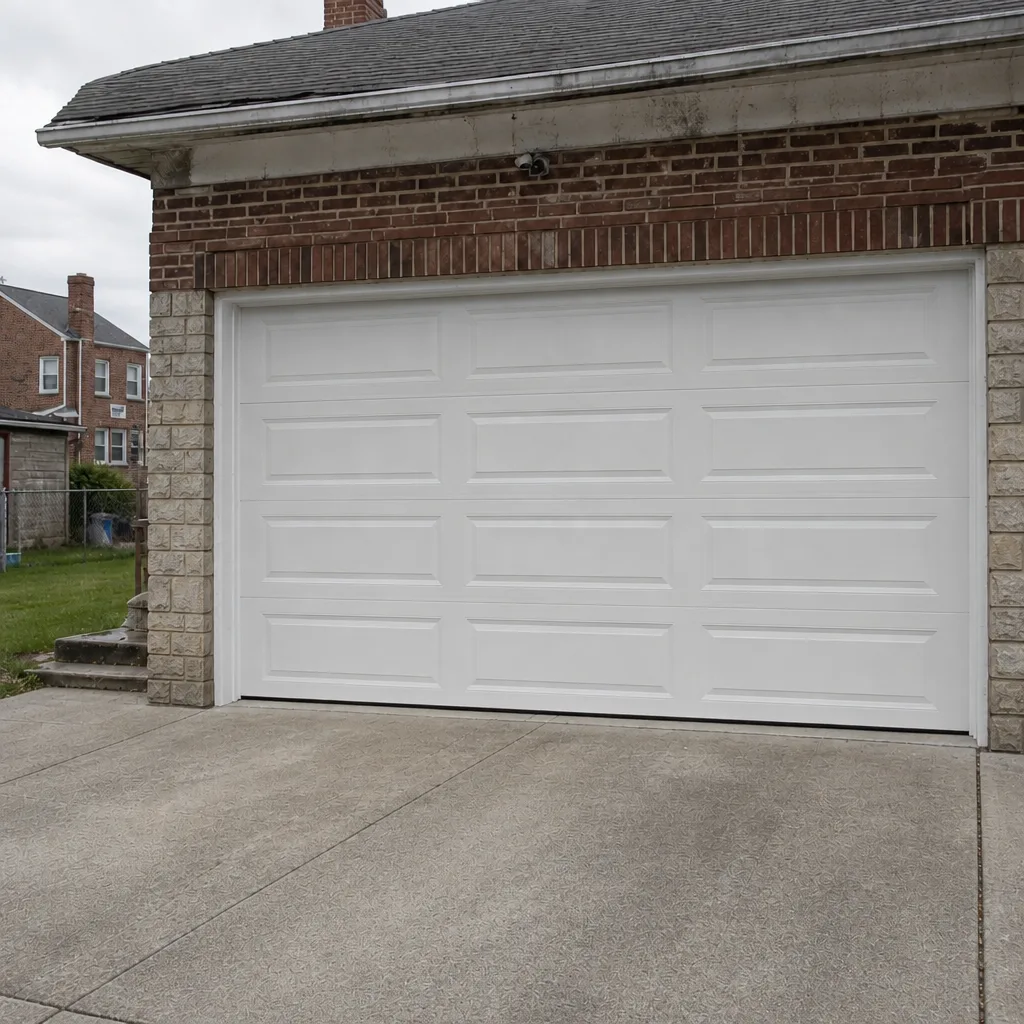 After
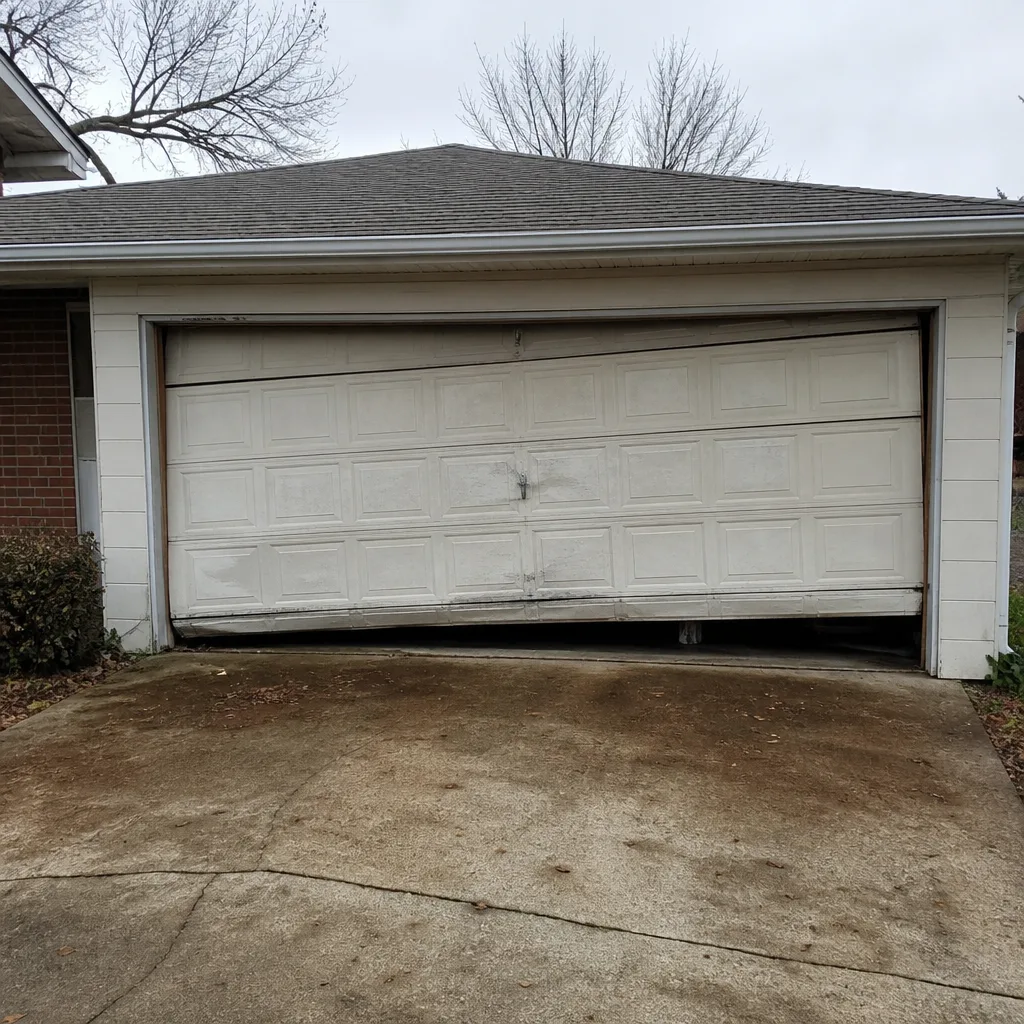 Before
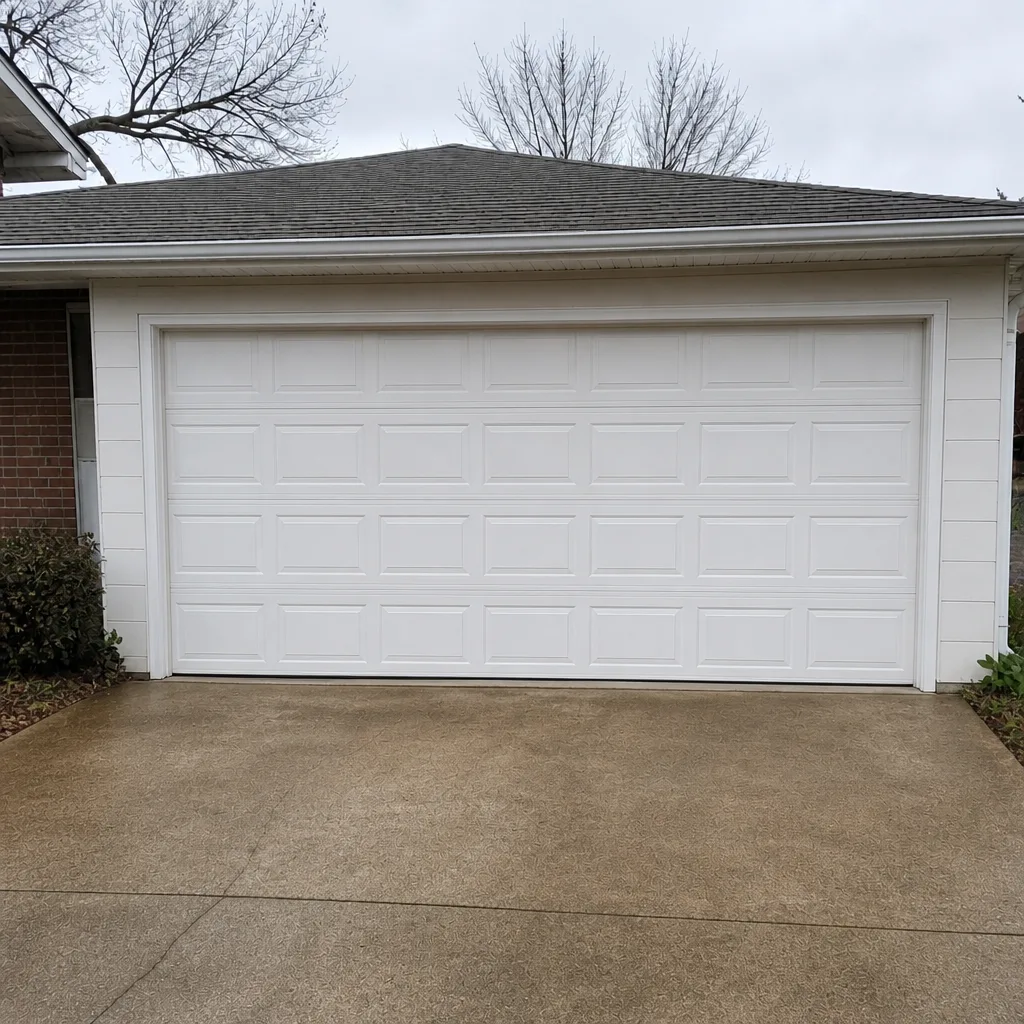 After
When to Call a Professional
Some jobs are worth doing yourself: clearing tracks, wiping sensors, checking weatherstripping, washing salt off the bottom rail. Others aren’t. Call a professional when you hear a bang from the garage, see a visible gap in the torsion spring, find a frayed or slack cable, or when the door is too heavy to lift by hand with the opener disconnected. Call when the door reverses for no reason after you’ve cleaned the sensor lenses. Call when the opener is repeatedly tripping its force limit, because that’s usually a sign of a mechanical problem the opener is reporting. And call before you attempt any spring or cable work – those are safety-critical, and a trained technician with the right tools should handle them.
Garage Door Repair Govans offers free estimates in Govans – call (877) 378-7082. We answer 24/7, with fast dispatch from 7am to 7pm, Sunday through Friday. Our technicians have up to 10 years of experience and work on the brand you already have.
Frequently Asked Questions
A garage door in Govans benefits from a seasonal rhythm rather than a single annual service: checks in each of the four seasons, with a spring inspection before winter. The exact frequency depends on how often you use the door and the brand of opener and door you have. If you use the garage as your main entry, the door cycles more per day and the springs age faster – so the fall cycle count matters more.
No. Torsion springs and the cables alongside them are under high tension, and releasing that energy incorrectly can cause serious injury. Spring repair requires specialized tools and training. The safe homeowner tasks are listening for a bang, checking for a visible spring gap, and checking cables for fraying – then calling a technician if you find a problem.
Heat expansion is the usual cause. The safety sensors at the bottom of the tracks align to a thin beam, and warm weather can shift the mounting brackets just enough to break it. Clean the sensor lenses and check that both indicator lights are steady. If one is flickering, the bracket has likely moved, and a technician can realign it.
A frozen door will strain or fail to lift, but you’ll usually see ice bonding the bottom seal to the slab. A broken spring usually announces itself with a loud bang when the door starts to move, and the door becomes too heavy to lift by hand. If it’s ice, clear it with a plastic scraper and check the seal. If it’s a spring, stop using the door and call a technician.
You lubricate in fall, before the first hard freeze, so the lubricant is in place when cold weather arrives. Use a garage-door-specific product that doesn’t thicken in the cold, and apply it lightly to the rollers, hinges, and torsion spring coils. If you miss the fall window, lubricating on a mild winter day is better than waiting for spring.
We work on eight major brands, including LiftMaster, Chamberlain, Genie, Clopay, Amarr, Wayne Dalton, Craftsman, and Raynor. Brand-specific diagnostics shorten the troubleshooting, whether it’s reading a Chamberlain fault code or checking a Clopay panel for swelling. Call (877) 378-7082 for a free estimate – we work on the brand you already have.
The Bottom Line
Seasonal garage door care in Govans works when you match the task to the season that causes the problem. Check seals and sensors in summer, clear tracks and re-lubricate in fall, watch seals and springs through the freeze-thaw of winter, and inspect for salt corrosion and recalibrate the opener in spring. Post the month-by-month calendar in your garage and stay roughly on schedule. The tasks you can do yourself are the low-risk ones – cleaning, wiping, checking. Springs and cables belong to a trained technician, every time. A door that’s maintained this way is less likely to fail on the coldest morning of the year, and if it does, you’ll know what to do. Call (877) 378-7082 for a free estimate. We answer 24/7, with fast dispatch from 7am to 7pm, Sunday through Friday.
Written by the team at Garage Door Repair Govans.